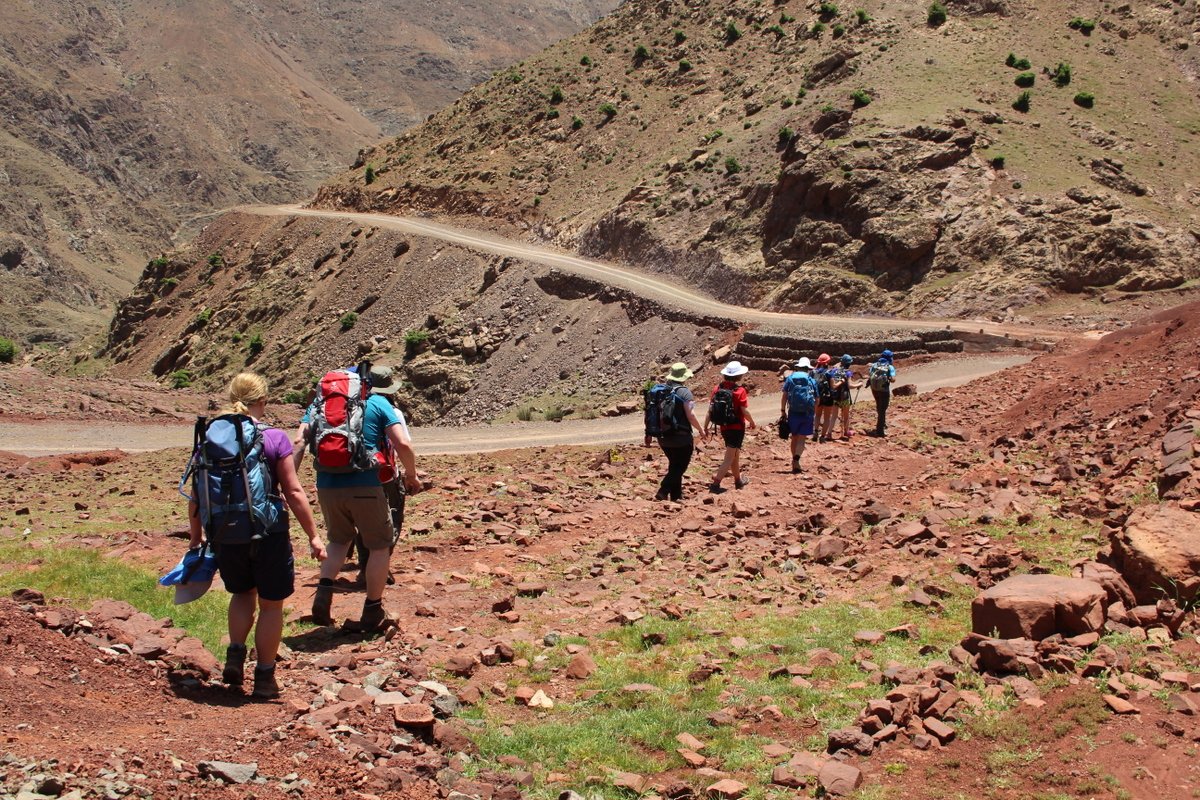
From the walnut-shaded trails of Ourika Valley to the scree slopes of North Africa's highest peak — the Atlas Mountains offer trekking for every pace and ambition. All led by licensed Berber mountain guides who have walked these routes their entire lives.
The High Atlas is one of the world's great walking ranges — accessible enough for a motivated first-timer, wild enough to challenge the most experienced trekker. At its centre stands Jbel Toubkal, 4,167 metres above sea level, the highest point in North Africa. Most people who summit it had never climbed anything like it before.
The range stretches for 2,400km across Morocco, Algeria and Tunisia. Our treks focus on the High Atlas — the section near Marrakech — and the wilder Central Atlas, home of the M'Goun Traverse, a 6-day wilderness route through valleys that see almost no other trekkers.
Every trek departs from Marrakech. Imlil, the mountain gateway village, is just 90 minutes away — a reminder that this extraordinary landscape is genuinely accessible from the city.
| Trek / Route | Grade | Days | Max Altitude | Fitness |
|---|---|---|---|---|
| Easy Atlas Walk | 1 day | 1,800m | Gentle walker | |
| Toubkal — 2 Days | 2 days | 4,167m | Regular hiker | |
| Toubkal — 3 Days | 3 days | 4,167m | Regular hiker | |
| M'Goun Traverse | 6 days | 4,071m | Experienced hiker | |
| Winter Toubkal | 3 days | 4,167m | Fit hiker + cold exp. |
Toubkal summit at 4,167m — first light over the Atlas
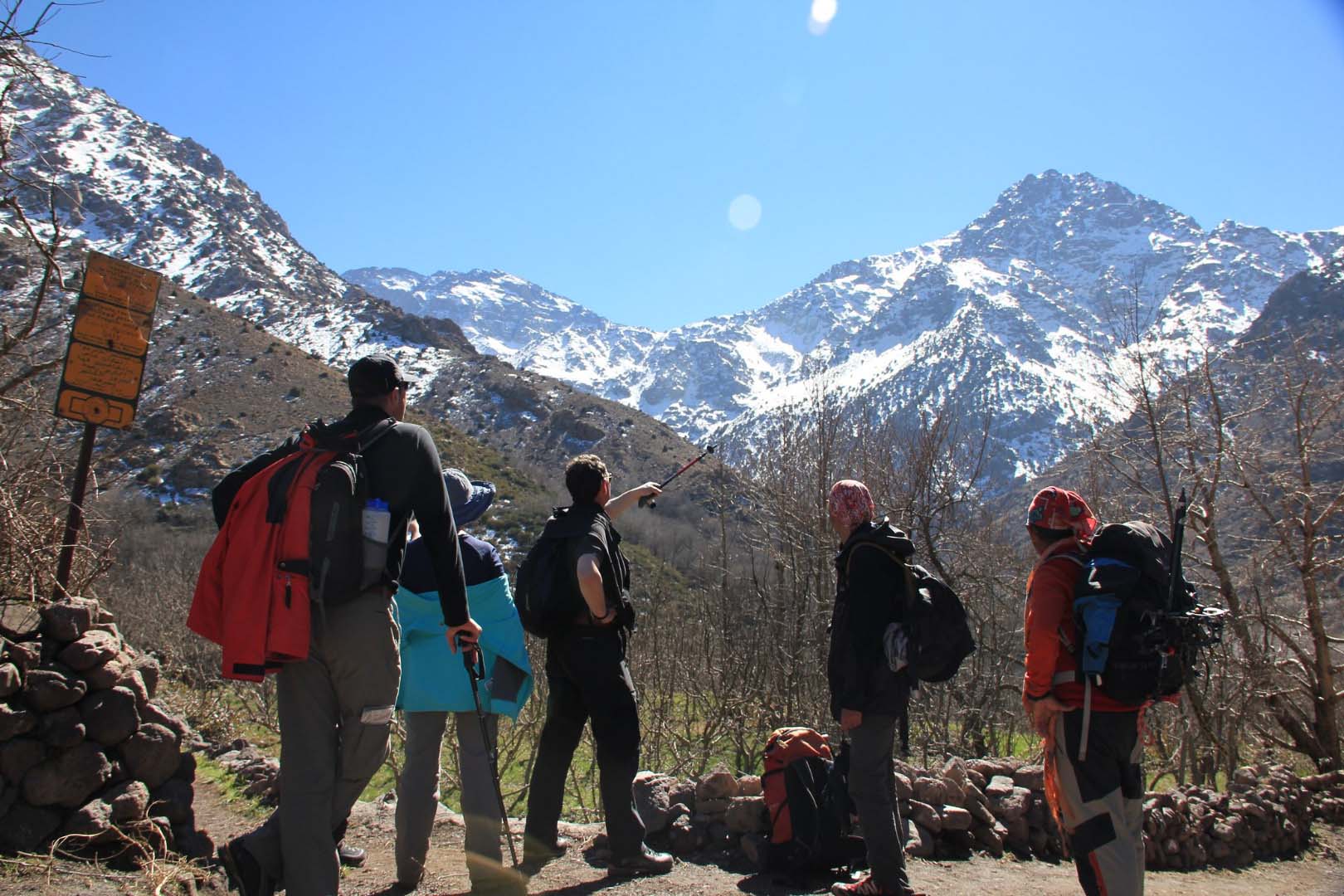
Every trek is 100% private — your group, your pace, your mountain guide.
The classic route to the summit of North Africa. Day 1: drive from Marrakech to Imlil, hike through Aroumd village and the Mizane Valley to the Toubkal Refuge at 3,207m. Day 2: summit at dawn, descend to Imlil, return to Marrakech. No technical climbing required.
The recommended Toubkal itinerary. Day 1 acclimatisation walk through Berber villages above Imlil, night in a private gîte. Day 2 to Toubkal Refuge. Day 3 summit and return. More relaxed, better acclimatised, higher summit success rate.
Morocco's finest multi-day wilderness trek. Six days through the Central High Atlas — crossing M'Goun (4,071m), walking ancient Berber mule routes through the Aït Bou Guemez valley, sleeping in remote gîtes that see almost no other trekkers. Entirely untouched by mass tourism.
Toubkal under snow is a completely different mountain. Crampons and ice axe required from December to March. The Atlas turns a deep, silent white. The refuge is half-empty. The summit views stretch over a snow-covered range that feels genuinely alpine. One of Morocco's most extraordinary experiences.
The Atlas without the altitude — a full day walking through walnut groves, terraced fields and Berber hamlets above Imlil. Lunch with a local family. The mountain experience, without the summit. Perfect for families, older travellers, or anyone who wants to feel the Atlas at a gentler pace.
Average years of guiding experience per guide
Born in the Imlil region
Every guide was born and raised in the Imlil valley or surrounding Berber villages. They know every ridge, every shortcut, every family who will invite you in for tea. The Atlas is not their workplace — it is their home.
All guides hold a licence from FRMAM (the Royal Moroccan Federation of Mountain Sports). Moroccan law requires a licensed guide in Toubkal National Park — we comply, and we only work with guides who have passed the full certification programme.
Our guides speak Tachelhit (Berber), Darija (Moroccan Arabic), French, and English. They explain the geology of every ridge, the history of every village, and the meaning of every Berber tradition you encounter on the trail.
Every guide carries a full mountain first-aid kit and holds a wilderness first-aid certificate. They have direct contact with mountain rescue services and know the evacuation routes from every point on every route we operate.
All guides licensed by FRMAM — Royal Moroccan Federation of Mountain Sports
Minimum 5
seasons of certified guiding required
Three types of mountain accommodation — each part of the experience, not just a place to sleep.
A traditional Berber stone farmhouse in Imlil village — the starting point for all Toubkal treks. Private rooms for your group, traditional Moroccan dinner and breakfast, and a rooftop terrace with Atlas views at sunset.
The CAF mountain hut below Toubkal's south cirque — a landmark of Atlas trekking. Bunkbed dormitories, hot meals, and the extraordinary experience of sleeping at 3,207m above sea level with the summit directly above you.
On the M'Goun Traverse, you sleep in small Berber gîtes in remote valley villages that see almost no tourists. Stone rooms, blankets, lantern light, and the sound of mules outside. The most authentic mountain accommodation in Morocco.
Yes — and this is not a suggestion. Moroccan law requires all trekkers in Toubkal National Park to be accompanied by a licensed Mountain Guide (certified by FRMAM). Independent trekking in the high Atlas is not permitted and carries real safety risks.
This is not bureaucracy — it is the reason the Atlas has an excellent safety record. Our guides have been walking these mountains their entire lives. They read the weather, know the evacuation routes, and have prevented dozens of emergencies over their careers.
Book a Licensed Guide →The Atlas trails are unmarked. Your guide navigates with decades of route knowledge — no GPS dependency, no guesswork.
Summit conditions change in minutes at altitude. Your guide makes the call on whether to push on or descend — their judgment has kept every client safe.
Every village you pass through has a story. Your guide speaks Tachelhit — the Berber language — and translates a world most visitors never access.
Wilderness first-aid certified, mountain rescue contacts, and full evacuation kit. In 12+ years of guiding, our team has never lost a client.
The Atlas is a year-round destination — but each season offers a completely different experience. Here is the honest guide.
| Month | Conditions | Temperature (Summit) | Rating | Best For |
|---|---|---|---|---|
| January | Heavy snow, crampons essential | −10°C to −5°C | Winter Ascent | Snow experience, winter trekkers |
| February | Deep snow, cold clear days | −8°C to −3°C | Winter Ascent | Crampons season, quiet trails |
| March | Snow melting, muddy trails | −2°C to +5°C | Good | Shoulder season, fewer crowds |
| April | Wildflowers, spring streams | +2°C to +8°C | Excellent | Scenic beauty, comfortable hiking |
| May | Clear skies, ideal temperatures | +5°C to +12°C | Best Season | Summit attempts, all treks |
| June | Hot valleys, cool summit | +8°C to +15°C | Excellent | Early start recommended, summit ideal |
| July | Very hot below 2,000m | +10°C to +18°C | Good | High-altitude only, depart at dawn |
| August | Hottest month, busy refuge | +10°C to +18°C | Challenging | Avoid valley walks, summit possible |
| September | Perfect clarity, warm days | +5°C to +14°C | Best Season | All treks, M'Goun ideal |
| October | Golden light, cool nights | +2°C to +10°C | Best Season | Photography, all treks, fewer tourists |
| November | First snow above 3,000m | −2°C to +6°C | Good | Quiet trails, atmospheric conditions |
| December | Full winter, crampons from mid-month | −8°C to −2°C | Winter Ascent | Snow experience, Christmas trekkers |
"I had never climbed anything above 2,000m in my life. Our guide Mohammed told me on the first day that I would reach the summit. He was right. Standing at 4,167m above Africa, I cried. The whole experience — the village, the refuge, the dawn climb — was the most meaningful thing I have ever done on holiday."
"The M'Goun traverse was unlike anything I have done in 20 years of trekking. Six days through valleys with no other trekkers, sleeping in stone farmhouses, waking to mountains with no one else in sight. Our guide Brahim knew every family along the route. This is what trekking used to be."
"We did the winter ascent in January with crampons and ice axes. Absolutely spectacular — the Atlas completely white, the refuge half empty, the summit views over a frozen landscape. Our guide had summited in winter over 200 times. We felt completely safe and completely amazed. Nothing like it."
Jebel Sahro in winter? Toubkal combined with the Sahara? A 10-day traverse across the full High Atlas? We'll build any trekking itinerary in Morocco around your dates, fitness, and ambitions.